
What Actually Happens in Your First Singing Lesson
By Sam Marlow, City Vocal Coach
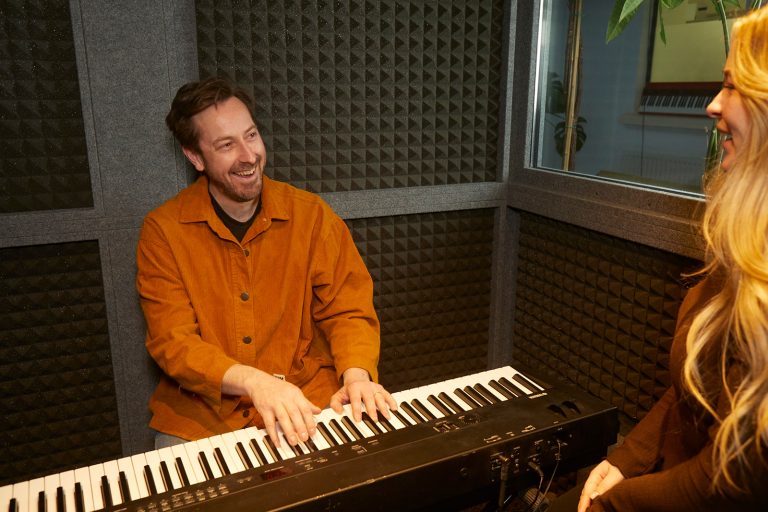
Most people searching this question aren’t looking for information. They’re looking for reassurance. They want to know whether they’ll be judged, whether they’ll be asked to sing something they haven’t prepared, whether a teacher will tell them they can’t sing. So let me walk through exactly what happens in a first lesson at City Vocal Coach, from the moment you arrive to the moment you leave.
Nobody will tell you that you can’t sing. That’s not what a lesson is for, and it’s not something any of our teachers would say. What we’re here to do is find out what’s happening in your voice and help you develop it.
Before you even come in
One thing that makes a first lesson at CVC different from walking cold into a new teacher is that it isn’t your first contact with us. Every student comes through a free fifteen-minute discovery call first. We’ll have already spoken, I’ll already know something about what you’re looking for, and you’ll already have a sense of who you’re coming to see. By the time you walk into the Hoxton studio, some of the nerves have already been dealt with. We can get straight into making the most of the hour rather than spending the first twenty minutes working out who you are and what you need.
The shape of a first lesson is the same whichever of our coaches you see, so everything here applies whether you’re working with me or with one of the team.
If you haven’t had a discovery call yet, that’s the place to start. Book one here.
The two questions
Before we sing a single note, I ask two questions.
The first: what would you celebrate about your voice?
Most students struggle with this one. Nobody has ever asked them it before. They’ve spent so long thinking about what’s wrong with their voice that they’ve never considered what they’d keep. After a pause, most people land on something: power, or range, or the fact that they can carry a tune even if it doesn’t feel that way. Starting here matters because it begins the lesson in the right place. You’re not walking in as someone with a problem to be fixed. You’re walking in as someone with something already working, and something to build on.
The second question: what do you think needs work?
This one is just as important, but for a different reason. When a student identifies what they want to improve themselves, rather than being told, they become an active participant in their own development. They’ve already agreed with themselves that there’s something to work on, which means they’re more open and more committed when we get to it.
The warmup
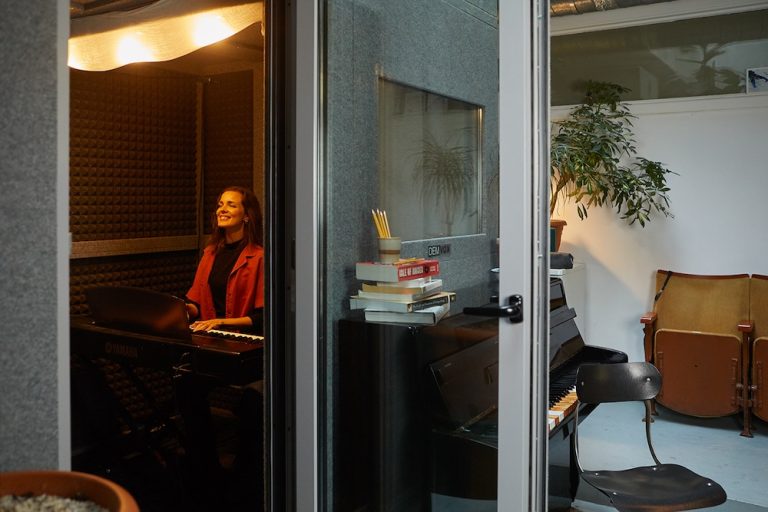
Once we’ve talked, we sing. The warmup does two things at once: it gets your voice ready to work, and it gives me my first chance to hear what’s actually going on. I’ll often sing the same exercises alongside you at the start, partly to demonstrate and partly because singing with someone rather than just at them tends to put people at ease quickly.
If you want to get a feel for the kind of exercises we use before you come in, we have warmups and other resources on our resources page. There’s no need to prepare or practise anything in advance, it’s simply there if it helps to know what to expect.
This is also where I start to notice things. What the voice is doing well, where the tension is sitting, what’s getting in the way. As we work through the warmup I’ll start to talk about what I’m hearing, and I’ll describe it in a few different ways: what it should sound like, what it should feel like, and what’s actually happening anatomically in the body. For most students this is the first time they’ve thought about their voice in this level of detail, and it tends to be the moment a lesson stops feeling abstract and starts feeling genuinely useful.
Something I ask a lot in first lessons
If a student has a very quiet voice, which is more common than you’d think, I’ll often stop and ask: when did you last shout?
The answer is almost always some version of “I don’t really shout.”
There’s a reason for this. We lose our natural, uninhibited voice around the age of four, when we start to understand language well enough to register a parent saying “use your inside voice” or “quieten down.” That process of taming the voice doesn’t stop there. It continues throughout our lives, across classrooms, offices, social situations, years of being told in one way or another to keep it down. By the time most adults come to singing lessons, they’ve been moderating their voice for decades.
Children in lessons will take risks with volume. They’ll be loud without thinking about it. Adults worry. And that worry lives in the body as physical tension, which is often the first thing we have to work through together. Learning to sing, for a lot of adults, means giving yourself permission to be loud again, sometimes for the first time in a very long time.
The second half: the song
The second half of the lesson is about working on a song. You can bring whatever you want. I can find the chords and play it for you on piano or guitar, so there’s no need to bring anything except the song title. If you’re not sure what to work on, I can make a suggestion based on what I’ve heard in the first half of the lesson.
A significant number of our students are songwriters who want to develop their voice through their own material. If that’s you, bring your own songs. There’s no better way to work on technique than in the context of music that actually matters to you.
The song section is where everything from the first half gets tested in a real situation. The techniques we’ve talked about, the things we noticed in the warmup, they become concrete when there’s a melody and words around them.
What you leave with
You’ll leave with a clearer sense of what your voice is actually doing, what’s working, and where to focus next. Most students are surprised by how much happens in an hour. Many of them arrive convinced there’s very little to work with. Most of them leave feeling differently about that.
The lesson takes place at our studio in Hoxton, east London. Find out more about the space here. You can also read about our beginner singing lessons and individual lessons, or meet the teaching team before you book.
Pricing starts at £80 per hour for foundation lessons. Full details in our 2026 price guide.
If you’d like to start with a free fifteen-minute discovery call, no audition, no commitment, no singing required, you can book one here.
FAQ
Do I need to prepare anything for my first singing lesson?
No. You don’t need to have a song ready, though if there’s something you’d like to work on it’s always worth having it in mind. The lesson is built around you from the start, so there’s nothing to prepare and nothing to get wrong before you arrive.
Will I be judged if I’m not very good?
No. A first lesson is about finding out what’s actually happening in your voice and working out where to go next. There’s no standard you need to meet to deserve a lesson, and no teacher at CVC will tell you that you can’t sing.
What if my voice cracks or I get emotional?
Both happen in lessons, more often than you might think, and neither is a problem. Singing is a more vulnerable thing than most people expect, and a good teacher knows that. You won’t be the first person it’s happened to.
What’s the difference between the discovery call and the first lesson?
The discovery call is a free fifteen-minute conversation, no singing required, where we get to know what you’re looking for and answer any questions you have. The first lesson is the full hour where the work actually begins. We recommend doing the call first so we can make the most of the lesson time when you come in.
How long is the lesson, and do I have to commit to a block?
All lessons at City Vocal Coach are one hour. You can book a single lesson to start with, and there’s no obligation to commit to a block upfront. Block bookings of five or ten lessons are available at a reduced per-session rate if you’d like to commit once you’ve had a chance to settle in. Full pricing details here.