
Private Singing Lessons or Group Classes: Which Is Right for You?
By Sam Marlow, City Vocal Coach
This is a question we get a lot, and it’s a good one. Both formats work. They work differently, they suit different students at different moments, and the honest answer isn’t always the more expensive one. Here’s a genuine comparison.
What private lessons do better
Everything in a private lesson is about you. The teacher’s full attention for the entire hour, feedback that is pinpointed specifically to what your voice needs to work on, material you choose, and a pace that’s yours rather than the group’s. If you have a specific goal, an audition coming up, a particular technical problem to solve, a song you want to get right, one-to-one is almost always the better format. The teacher can hear exactly what’s happening and address it directly, without having to balance the needs of several people at once.
Private lessons also offer scheduling flexibility that a group course can’t. You book when it suits you, you can focus on whatever matters most that week, and the relationship with your teacher develops in a way that’s genuinely specific to your voice and your progress.
What group classes do better
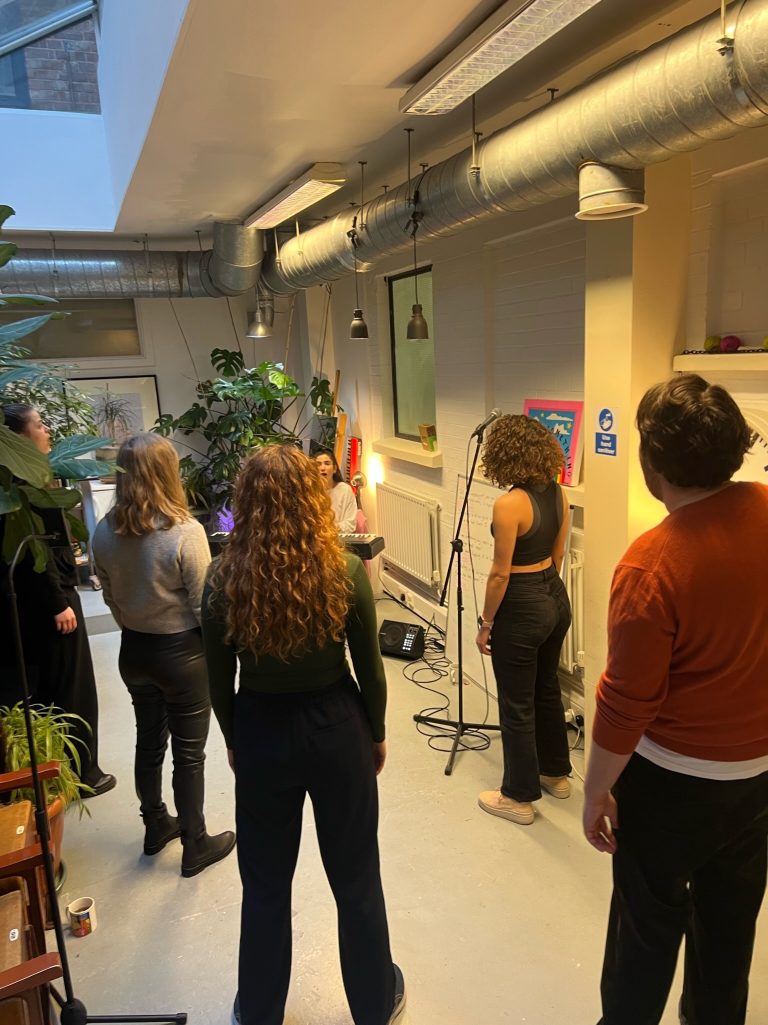
The most surprising thing about group singing classes, for most people who haven’t tried them, is that they’re often less nerve-wracking than private lessons once you’re in the room. In the lead-up, the thought of singing in front of a group can feel more daunting than singing in front of one person. A few minutes in, most students feel the opposite. There’s an “all in this together” quality to a group that you simply don’t get in a one-to-one, and that shared context makes the vulnerability of singing feel less exposed.
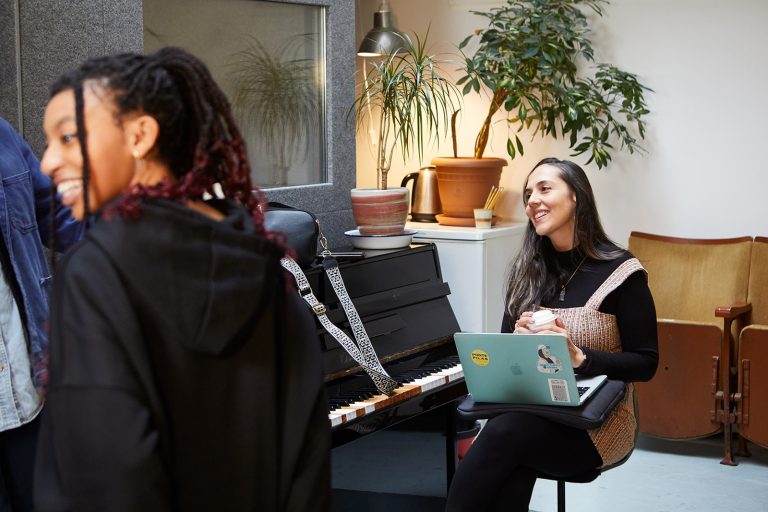
In our Open Mic Ready course at the Hoxton studio, students work one-to-one with the coach in front of the group. What this means in practice is that you get to watch other people develop in real time. You might see someone working on a technique and recognise something in your own voice. You might notice a solution to a problem you’ve been sitting with. Learning by watching is a genuinely different kind of learning, and it’s one that private lessons can’t replicate.
Groups also create accountability. You show up because other people are showing up. There’s a social momentum to a group course that many students find carries them through moments when solo practice or a private lesson might slip.
And then there’s the cost. More on that below.
The trade-offs, honestly
Private lessons can drift. The most common pattern I see is strong progress in the first ten lessons, followed by a plateau. At that stage a lot of the foundational work has been done, but the results aren’t as obvious because what’s happening is consolidation: building muscle memory, solidifying technique, preparing the voice for the more nuanced work that comes next. That phase is necessary and real, but it doesn’t always feel like progress, and some students lose momentum there.
Group classes give up individual attention. In a group, the pace is set collectively and the feedback, however skilled the teacher, is spread across several people. If you have a specific technical issue that needs intensive focus, a group class may not get to it in the depth a private lesson would. The group format is better at developing and bringing out what’s already there than at diagnosing and fixing something specific.
The cost comparison
Foundation one-to-one lessons at City Vocal Coach are £80 per hour. Advanced one-to-one lessons are £105 per hour. Our Open Mic Ready group course is £400 for five sessions of 2.5 hours each, which works out at £32 per contact hour. That’s less than half the foundation rate and roughly a third of the advanced rate for the same teacher in the same studio.
Full pricing details, including block booking discounts for private lessons, are in our 2026 price guide.
Who should start with which
Start with a group course if you’re a nervous beginner who finds the idea of singing alone to a teacher uncomfortable, if cost is a real consideration, or if you want a structured path to a live performance as quickly as possible. The Open Mic Ready course ends with a performance at one of our monthly open mic nights, which means from day one there’s something concrete to work towards. That structure suits people who need an external goal to stay motivated.
Start with private lessons if you have a specific goal with a deadline, such as an audition or a performance, if you have a particular technical problem you want to work on intensively, or if you want the full attention of a teacher on your voice from the start. Our individual singing lessons and beginner lessons are both available at our Hoxton studio in east London and online.
What students say about the group course
“I was an ok singer but a terrible performer when I started this. It’s a super quick burst of classes that lifts you up and puts you on a stage with no excuses or get-outs — which is just what I needed. I’ve performed several times since, and the songs I workshopped on the course are always the ones performed best.” — Jeremy
“It was the best decision I’ve ever made. With Valentina’s guidance, I found the confidence I needed to get back on stage. The final performance in front of my classmates and a bunch of strangers went amazingly well. I was so proud of myself.” — Robbie
Doing both, and when to switch
Many of our students do both formats, though not usually at the same time. The pattern we see most often is a student who has been doing private lessons for a while, reaches the plateau stage, and takes the group course as a way of breaking through it. The course works differently to a private lesson: it’s more performance-focused, more social, and the live performance at the end tends to consolidate everything the private lessons have been building in a way that another private lesson simply can’t.
Students often come back to their private lessons after the course with their voice at a noticeably different level. The break from intensive one-to-one work, combined with the experience of performing, seems to unlock something. In sixteen years of teaching I’ve found consistently that students who perform develop faster than those who don’t, and the group course is the most structured way we offer to make that happen.
Where to start
If you’re not sure which format is right for you, the best first step is a conversation. Our free fifteen-minute discovery call is exactly that: a relaxed chat about where you are, what you want, and which format makes the most sense. No audition, no commitment, no singing required on the call.
You can also read about what actually happens in a first lesson, find out whether singing lessons are worth it for you, or look at the Open Mic Ready course in more detail before you decide.
FAQ
Are group singing classes as effective as private lessons?
They’re effective in different ways. Private lessons offer pinpointed feedback on exactly what your voice needs to work on. Group classes develop and bring out what’s already there, add a performance element, and create social momentum that private lessons don’t. Many students find they get the most from doing both at different stages.
Are group singing classes less nerve-wracking than private lessons?
Often yes, once you’re in the room. The lead-up can feel more daunting, but most students find that the shared context of a group makes singing feel less exposed than performing alone in front of a teacher. The “all in this together” quality of a group is something one-to-one simply can’t replicate.
How much do group singing classes cost compared to private lessons?
At City Vocal Coach, private foundation lessons are £80 per hour and advanced lessons are £105. The Open Mic Ready group course is £400 for five sessions of 2.5 hours, working out at £32 per contact hour. Full details in the 2026 price guide.
Can I do both private lessons and a group course at the same time?
Yes, though most students tend to pause their private lessons while doing the course and return to them afterwards. The two formats complement each other well at different stages: private lessons build the foundations, the course puts them into practice in a performance setting, and students often come back to private lessons with their voice at a noticeably different level.