
Songwriting Courses in London: Prices, Formats and What to Expect
By Sam Marlow, City Vocal Coach
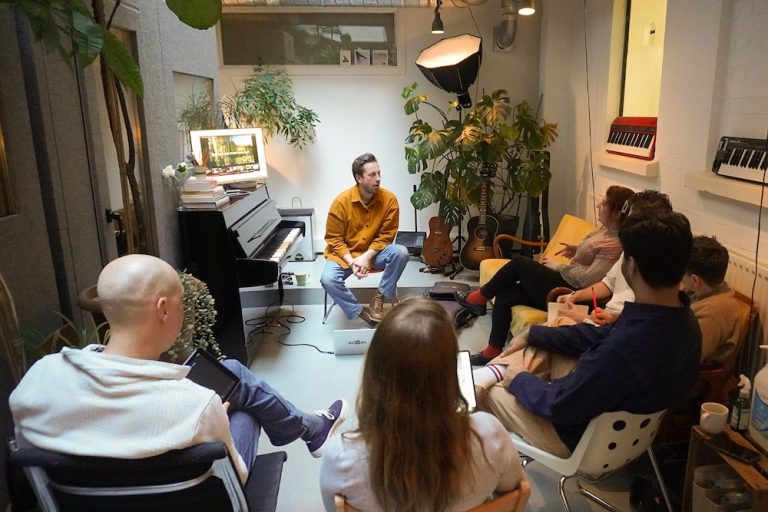
London has more ways to learn songwriting than almost any city in the world. The hard part isn’t finding a course. It’s working out which format suits what you actually want to do. This guide covers the main options honestly, with notes on who each one is best for.
College short courses
The most structured option outside a full degree. ICMP, whose Queen’s Park campus is in north-west London, runs several songwriting short courses aimed at adult learners. These range from a 12-week evening Introduction to Songwriting course through to a one-week Songwriting Camp and a two-week intensive Industry Songwriting course. Prices vary by format and intake, so check their site for current availability.
ICMP also offers a Masters in Songwriting, which they describe as London’s very first songwriting-specific postgraduate programme. I hold that degree, and I can say from the inside that the institution is serious about the craft.
BIMM, which has a campus in central London, offers several songwriter camp formats: a three-day intensive, a six-week part-time evening course, and a two-week full-time camp, all ending with a professionally recorded track. Check their site for current dates and prices.
These courses suit people who want a structured curriculum, a peer group to write alongside, and the credibility of a well-known music institution behind the experience. The co-writing and peer feedback elements are genuinely valuable, and the ICMP and BIMM names are well regarded in the industry.
The trade-off is that they cover broadly applicable material rather than your specific songs, your specific problem or your particular voice as a writer.
Adult education evening classes
The most affordable classroom option. Morley College, whose Waterloo campus is a London institution, runs a ten-week Start with Songwriting evening course at an accessible price point, with a concession rate available. They occasionally offer a free short introduction to songwriting course funded through the local council, aimed at complete beginners. Check their site for current dates and prices.
These courses suit people who want to try songwriting in a low-pressure environment, who are at the very beginning, or who want the routine of a weekly class without the price tag of a specialist music college. The quality depends on the tutor, and the level of technical depth is generally less than a specialist institution. But for a first step, they are hard to beat on value.
Group workshops and intensive days
One-off or short-run events rather than sustained courses. These appear regularly across London through venues, arts organisations and music schools. They suit people who want a taste of the craft before committing to a longer course, or who want to write in a room with other writers without a multi-week commitment.
The limitation is that a single day or a two-session workshop can’t build the foundation that sustained study does. They’re useful for inspiration and momentum, less useful for developing consistent craft.
Online courses
The most flexible option and, at the lower end, the cheapest. Platforms like Coursera offer songwriting courses from institutions including Berklee College of Music, some of which can be audited free of charge. Paid options range from very affordable to more substantial, depending on the depth and accreditation of the programme.
Online courses suit people who want to learn at their own pace, who are comfortable with self-directed study, or who are outside London and can’t attend in person. The weakness is accountability: without deadlines, a peer group or a teacher who knows your work, it’s easy for an online course to become a subscription you intend to start.
One-to-one lessons and mentoring
The most targeted option. Rather than a fixed curriculum, one-to-one lessons work on your songs, at your pace, with feedback specific to what you’re writing. A good songwriting teacher can identify exactly what’s holding a piece back, whether that’s a lyric problem, a structural issue, a melody that isn’t landing, or a chorus that doesn’t earn its arrival.
One-to-one lessons cost more per hour than group options, but the contact time is entirely yours. For someone who is already writing and wants to develop faster, or who has a specific problem they can’t solve alone, one-to-one tends to produce results that group courses can’t replicate.
How to choose
Choose a group course if you want a structured curriculum with a clear start and end point, if you’re at the very beginning and want to be around other writers, if you have a tight budget, or if you want the accountability that comes from a fixed schedule and a cohort.
Choose one-to-one lessons if you’re already writing and want to go faster, if you have material you want to develop specifically, if you’ve hit a wall you can’t get past alone, or if you want feedback calibrated to your voice as a writer rather than to a general class.
Many writers do both at different stages: a group course to get started or reignite momentum, and one-to-one lessons when they want to go deeper into the craft.
Songwriting lessons at City Vocal Coach
I offer one-to-one songwriting lessons at the Hoxton studio in east London and online. Sessions are £150 per hour and are built entirely around your own material, from a single verse upward. You leave each session with real, developed work and a clearer understanding of the craft behind it.
I co-wrote the ABRSM Songwriting Grades syllabus, hold a Masters in Songwriting from ICMP, and have taught at the BRIT School and worked with artists who have gone on to platinum-selling careers. That background means lessons draw on both formal craft knowledge and real industry experience.
Students who want to perform their own songs can do so at our monthly open mic nights at the Hoxton studio, which gives the writing a real destination rather than a folder on a laptop.
For students who are further along as artists and need broader support beyond the writing itself, CVC also offers music mentoring with Polly Scattergood, covering the industry, releases, and what comes after the songs are written.
If you’d like to go deeper on writing better lyrics specifically, our guide to avoiding cliché in songwriting covers the craft in detail.
The best first step is a free fifteen-minute discovery call, where we can talk through where you are as a writer and whether one-to-one lessons are the right fit. No commitment, no audition, no singing required on the call. Book one here.
FAQ
How much does a songwriting course cost in London?
It depends on the format. Adult education evening classes at colleges such as Morley College are the most affordable option, with concession rates available. Short courses at specialist music colleges like ICMP and BIMM vary by format, from 12-week evening programmes to intensive one and two-week courses at higher price points. One-to-one songwriting lessons at City Vocal Coach are £150 per hour, with all time spent on your own material. Check each provider’s website for current prices as these change between intakes.
Can you learn songwriting if you don’t play an instrument?
Yes. Most songwriting courses, including the group courses at Morley College, explicitly state that instrumental ability is not required. The craft of songwriting, lyric writing, melody, structure and song architecture, can be developed without being a proficient instrumentalist. Having some way to capture musical ideas helps, whether that’s a basic chord on guitar, a piano, or a voice memo on your phone, but it’s not a barrier to starting.
Do you need to be a good singer to write songs?
No. Some of the most successful songwriters in the industry are not strong singers, and many write primarily for other artists. Songwriting is a separate craft from vocal performance, and neither depends on the other. That said, if you want to perform your own material, developing your voice alongside your writing gives the songs a home.
Are online songwriting courses worth it?
For the right student, yes. Online courses from institutions like Berklee are genuinely well structured and some can be audited free of charge. The main risk is accountability: without a teacher who knows your work, a peer group, or a fixed schedule, online courses can drift. They work best for self-directed learners who are comfortable setting their own pace. For most writers who want real feedback on specific songs, in-person or one-to-one options tend to produce faster results.